Dubai Free Zone vs. Mainland:
Which is Right for Your Business?

Shyam Sarrof
Senior Corporate Advisor & Founder. Over 2 decades of experience in UAE financial regulation, corporate structuring, and internal audit.
Executive Summary
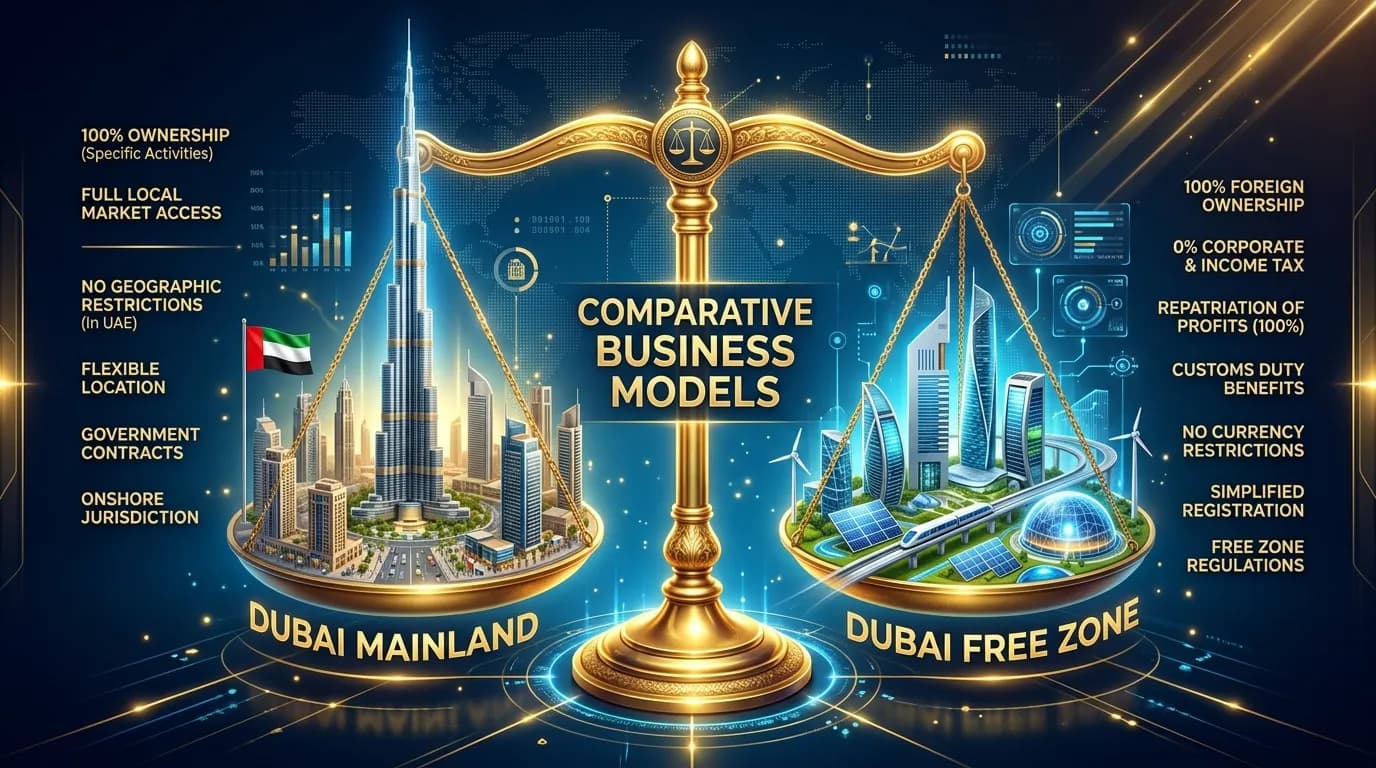
The core difference between a Mainland and Free Zone company in Dubai is geographic scope and regulatory jurisdiction. A Mainland Company is licensed by the Dubai Department of Economy and Tourism (DET) and can trade directly anywhere in the local UAE market and internationally, with 100% foreign ownership now allowed for most activities. A Free Zone Company is licensed by an independent Free Zone Authority (e.g., DMCC, JAFZA) and offers rapid, cost-effective setup and potential 0% Corporate Tax on qualifying income, but is legally restricted from trading directly with the local UAE market without an agent.
The very first decision any foreign entrepreneur faces when expanding to Dubai is also the most consequential: Where exactly should the entity be incorporated?
In many global jurisdictions, setting up a company is a uniform process. In the UAE, you are essentially choosing between dozens of mini-jurisdictions. You can incorporate "Onshore" (Mainland) or in one of over 40 specialized "Offshore/Mid-shore" zones (Free Zones). Making the wrong choice can lead to severe operational bottlenecks, inability to open corporate bank accounts, or unexpected 9% corporate tax liabilities.
What is a Dubai Mainland Company?
A Mainland company is an onshore entity registered with the Dubai Department of Economy and Tourism (DET). Historically, establishing a Mainland company required a local Emirati sponsor to hold 51% of the shares.
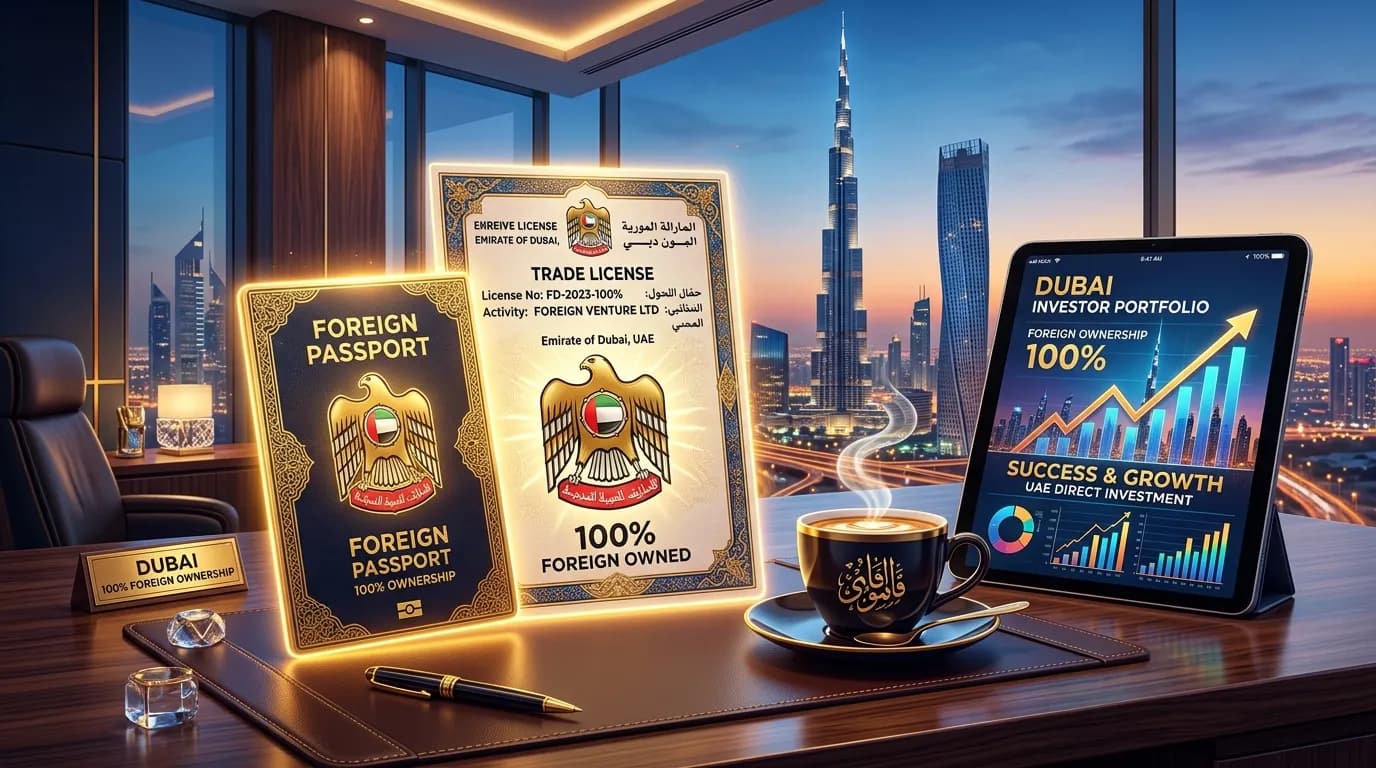
The 100% Foreign Ownership Era: As of recent sweeping legal reforms, the UAE abolished the 51% local sponsor requirement for the vast majority of commercial and industrial activities. Today, a foreign investor can own 100% of their Mainland LLC.
The Pros of Mainland Setup:
- Zero Geographic Restrictions: You can lease retail or office space anywhere in Dubai, and sell directly to consumers anywhere in the UAE.
- B2B and Government Contracts: If you plan to tender for lucrative UAE government contracts, a Mainland license is almost always a strict prerequisite.
- Broad Activities: You can combine a wider variety of disparate business activities under a single trade license compared to Free Zones.
What is a Dubai Free Zone Company?
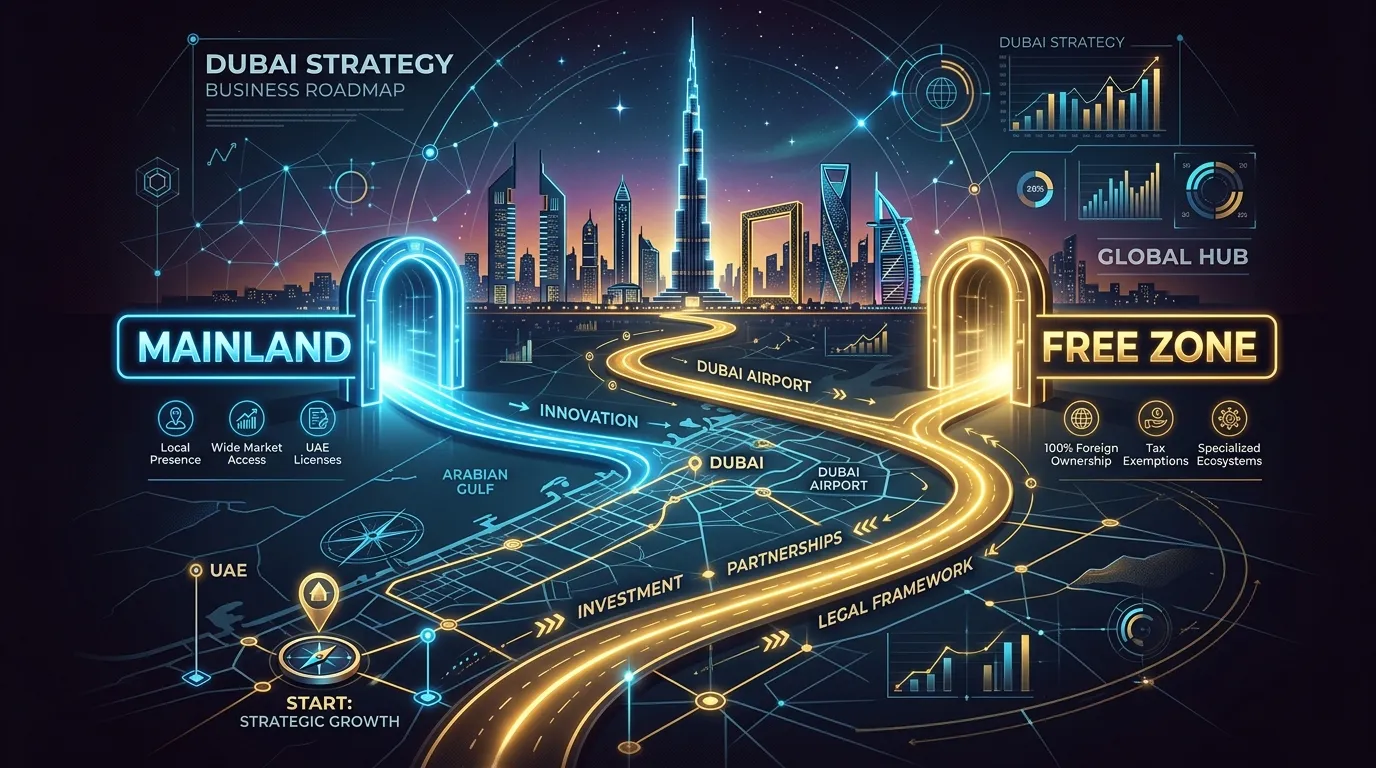
Free Zones are special economic areas designed to boost international business by providing custom-tailored regulations, tax exemptions, and specialized infrastructure. Examples include the Dubai Multi Commodities Centre (DMCC), Jebel Ali Free Zone (JAFZA), and Dubai International Financial Centre (DIFC).
The Pros of Free Zone Setup:
- 0% Corporate Tax Potential: Under the 2026 Corporate Tax regime, Free Zone entities that meet strict economic substance requirements and derive "Qualifying Income" (usually B2B international trade or holding company activities) can claim a 0% corporate tax rate.
- Cost-Effective Launch: Many Free Zones offer "Flexi-desk" or "Co-working" licenses, allowing founders to legally register a business and secure visas without leasing an expensive physical office space.
- Import/Export Duty Exemptions: Goods imported into a Free Zone and subsequently exported outside the UAE are exempt from the standard 5% customs duty.
The Cons of Free Zone Setup:
- The Local Market Barrier: A Free Zone company cannot legally invoice a Mainland B2B client for physical goods, nor can it open a retail shop in a Mainland mall. You must utilize a Mainland distributor, who will charge a fee. (Note: The rules are slightly more relaxed for some consulting and digital services).
- Strict Auditing: To claim the 0% tax exemption, Free Zone companies are now strictly mandated to maintain and submit audited financial statements annually.
Which Option Should You Choose?
Choose Dubai Mainland if you are:
- A retail brand opening a physical storefront, restaurant, or café in Dubai.
- A B2B service provider (like construction, interior design, or local marketing) whose primary clients are other UAE Mainland businesses.
- Bidding on government tenders.
- Planning to hire a massive local workforce and require substantial visa quotas (which are tied to office square footage on the mainland).
Choose a Dubai Free Zone if you are:
- An e-commerce business selling digital goods globally.
- A holding company managing global intellectual property or foreign subsidiaries.
- A solopreneur or consultant working entirely remotely with clients in the US, Europe, or Asia.
- A commodities trading company that utilizes the Free Zone port infrastructure to import and re-export without goods entering the local UAE market.
Make the Right Structural Decision
Re-structuring a company from a Free Zone to the Mainland (or vice-versa) after operations have begun is a highly complex, expensive, and time-consuming process. It requires liquidating the old entity, closing bank accounts, and transferring visas.
Getting it right on Day 1 is critical. Delphi Consultancy's structuring experts analyze your specific 3-year business plan, projected revenue streams, and target markets to recommend the absolute optimal jurisdiction. Contact our advisory team to map out your UAE incorporation strategy today.