Company Formation in Dubai:
The Complete 2026 Handbook

Shyam Sarrof
Senior Corporate Advisor & Founder. Over 2 decades of experience in UAE financial regulation, corporate structuring, and internal audit.
Executive Summary
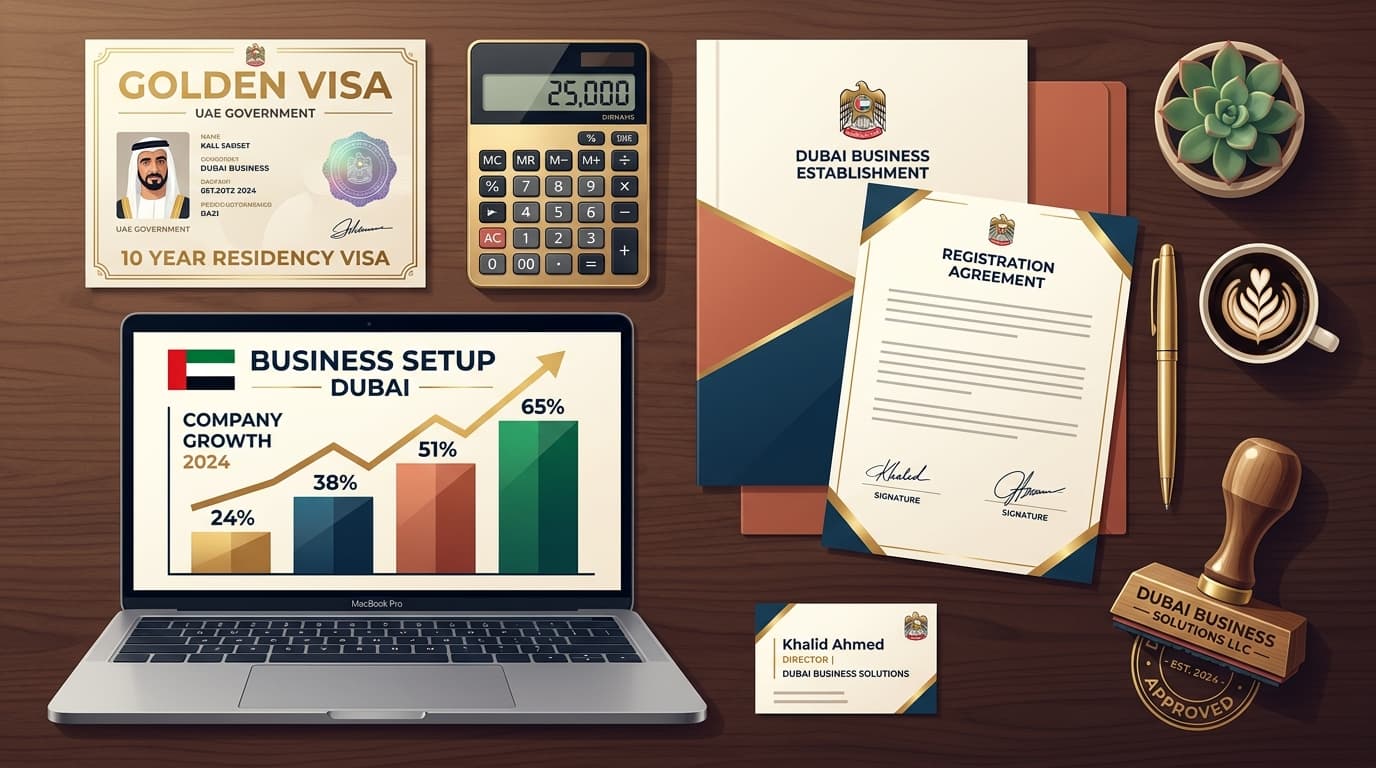
Company formation in Dubai is the process of legally registering a business entity within the UAE. In 2026, foreign investors have three primary jurisdictions to choose from: Mainland (allowing 100% foreign ownership for most activities), Free Zone (offering 0% corporate tax for qualifying income and specialized hubs), and Offshore (for asset holding). The typical process involves defining your business activity, reserving a trade name, securing initial approval, and submitting final incorporation documents, taking an average of 3 to 10 business days.
The UAE's economic landscape is evolving rapidly. With the introduction of the 9% Corporate Tax in 2023 and relaxed foreign ownership laws, the strategic decisions you make during your initial company formation process will dictate your compliance burden and growth potential for years to come.
This guide, updated for the 2026 regulatory framework, breaks down exactly how to structure, register, and launch your business in Dubai. Whether you are a solo entrepreneur setting up an e-commerce brand or a multinational corporation establishing a Middle East headquarters, this handbook is your definitive roadmap.
What are the primary jurisdictions for business setup?
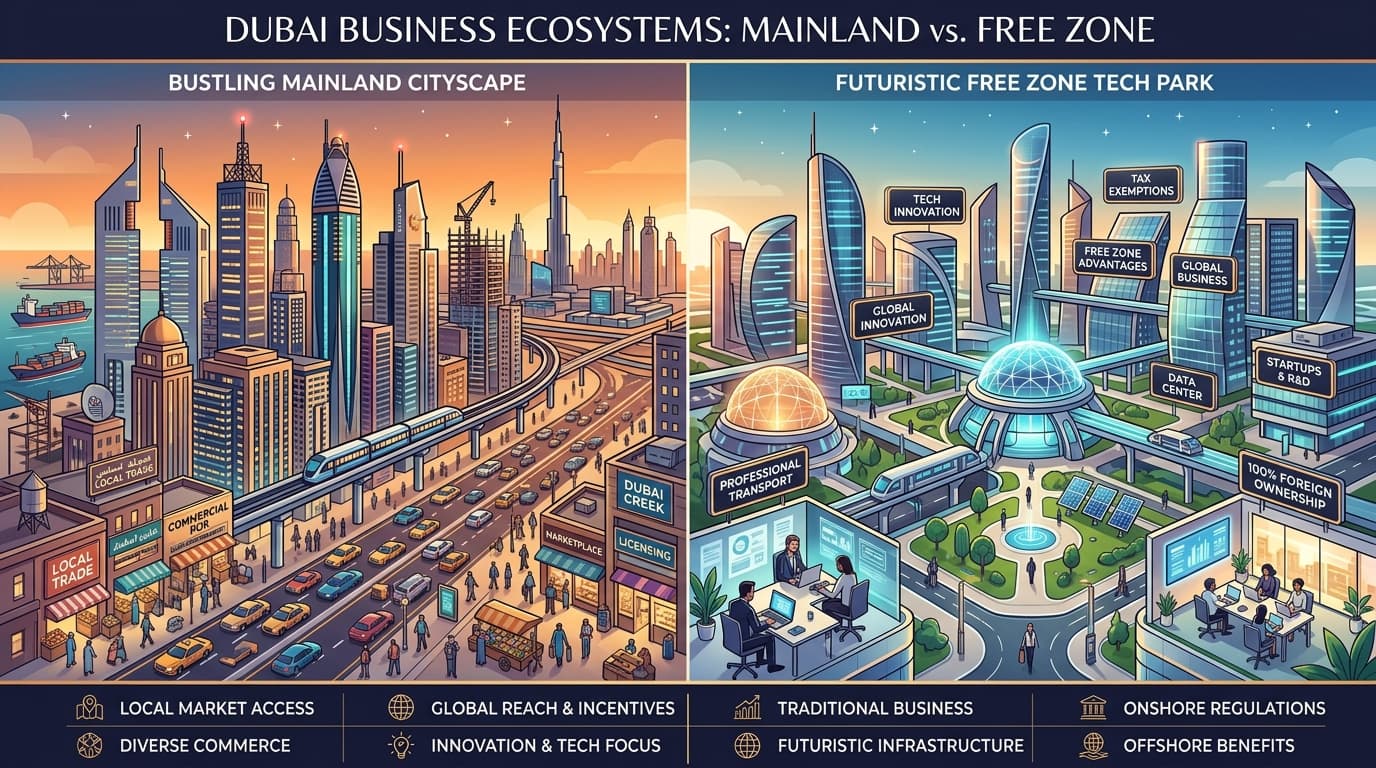
Before choosing an office space or a trade name, you must decide which legal jurisdiction aligns with your business model. Dubai offers two distinct primary pathways: Mainland and Free Zone. The decision you make here dictates your operational scope, tax liabilities, and visa quotas.
1. Free Zone Setup
Ideal for tech startups, global traders, and specialized service providers who do not need to transact directly with the local UAE B2C market.
- 100% foreign ownership by default.
- 0% corporate tax on Qualifying Income.
- Independent customs regulations (0% import/export duties).
- Cannot trade directly in the local UAE market without a local distributor or agent.
2. Mainland Setup
Ideal for retail, food & beverage, healthcare, and businesses that need to operate anywhere in Dubai and bid for government contracts.
- Trade freely anywhere in the UAE and internationally.
- Take on lucrative government contracts.
- 100% foreign ownership now allowed for thousands of commercial activities.
- Subject to the standard 9% Corporate Tax framework.
Top 5 Free Zones in Dubai for 2026
If you decide on a Free Zone route, Dubai offers over 30 specialized zones. Selecting the right one is critical because each has its own regulatory authority, cost structure, and allowable business activities. Here are the top 5 we recommend for 2026:
- DMCC (Dubai Multi Commodities Centre): The world's flagship free zone. Best for crypto, commodities trading, and general trading. Offers premium infrastructure in JLT but comes with stricter compliance and audit requirements.
- IFZA (International Free Zone Authority): Highly cost-effective and flexible. Known for rapid processing times and the ability to combine commercial, professional, and industrial activities under one license.
- Meydan Free Zone: Excellent for digital entrepreneurs and consultants. Offers a premium business address near Downtown Dubai and allows opening a bank account relatively easily.
- JAFZA (Jebel Ali Free Zone): The logistics powerhouse. Essential for large-scale manufacturing, import/export, and businesses requiring massive warehouse spaces near the Jebel Ali Port.
- DIFC (Dubai International Financial Centre): The apex jurisdiction for financial services, fintech, wealth management, and venture capital. Regulated by the DFSA under English Common Law.
How do you structure your license?
The Dubai Economy and Tourism Department (DET), formerly DED, classifies business activities into three major license types. Selecting the correct license is the foundational step of your company formation.
- Commercial License: Required for trading activities, retail, import/export, and general commerce. Often formed as an LLC (Limited Liability Company).
- Professional License: Required for service-oriented businesses, consultancies, artisans, and specialized professionals. Usually formed as a Civil Company or Sole Establishment.
- Industrial License: Required for manufacturing, production, and processing operations. Requires approvals from the Ministry of Industry and Advanced Technology (MoIAT).
What are the exact steps for company formation in Dubai?
While the process has been heavily digitized, navigating the portals requires precision to avoid costly rework.
- Determine Activity and Jurisdiction: Your intended operations dictate whether a specific Free Zone or Mainland is mandatory.
- Trade Name Reservation: Submit 3-5 name options to the regulatory body. Ensure they comply with UAE naming conventions (no religious references, unabbreviated names if using a person's name).
- Initial Approval: Obtain preliminary consent from the government indicating no objection to your business establishing itself in the UAE.
- Draft the MOA/LSA: Draft the Memorandum of Association (for LLCs) or Local Service Agent agreement. Note: Even with 100% foreign ownership, drafting a watertight MOA is critical for dispute resolution.
- Ejari Registration: Lease a physical office space and register the contract via Ejari (mandatory for Mainland and many Free Zones).
- Final Submission & License Issuance: Submit all attested documents, passport copies, and pay the final voucher to officially launch your business.
How does Corporate Tax impact new setups in 2026?
As of the Federal Decree-Law No. 47 of 2022, UAE Corporate Tax applies at a standard rate of 9% on taxable income exceeding AED 375,000. This represented a massive paradigm shift in the UAE's business environment.
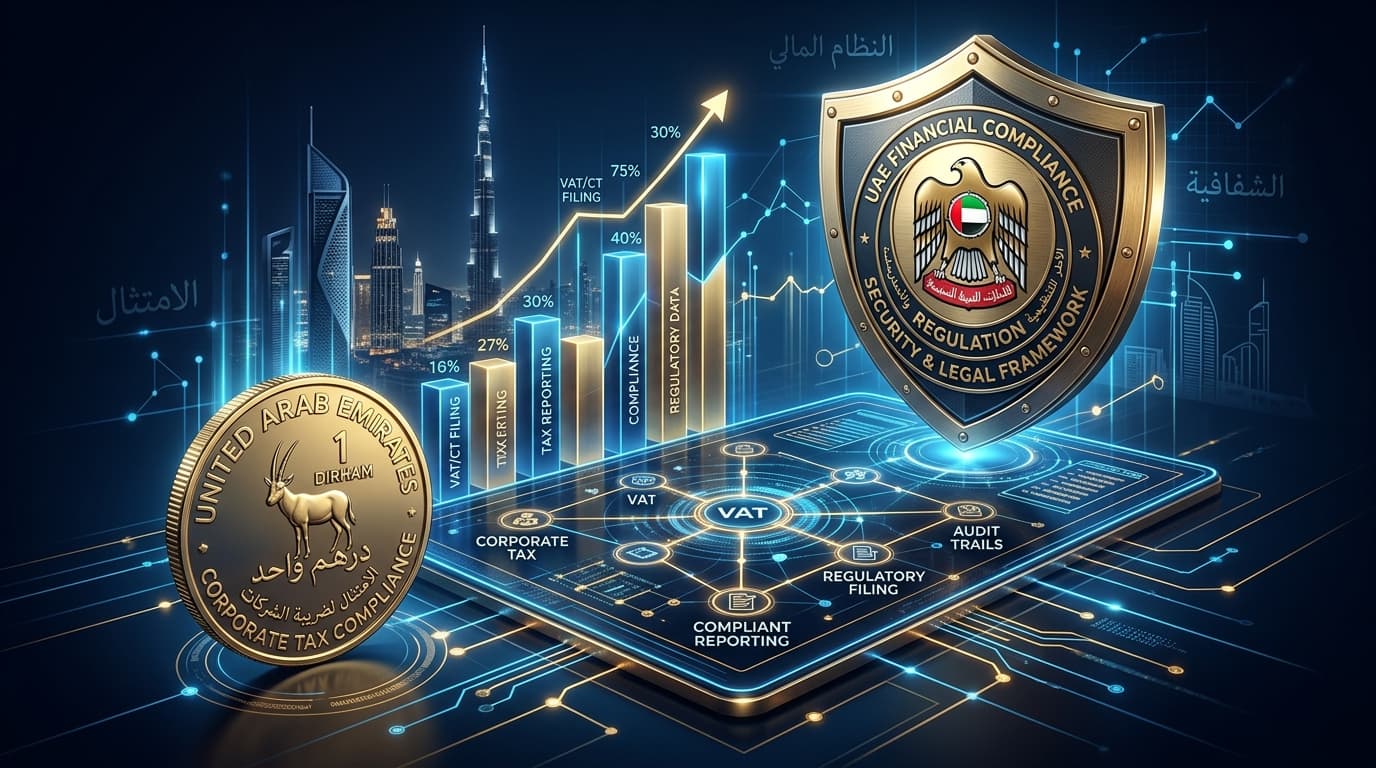
If you incorporate in a Free Zone, you may benefit from a 0% rate on Qualifying Income. However, the definition of "Qualifying Income" is strict. It generally includes income derived from transactions with other Free Zone persons, or income derived from "Qualifying Activities" (like manufacturing, processing, or holding shares) even if dealing with Mainland/Foreign entities.
Crucially: Registration for Corporate Tax is mandatory for all entities, regardless of whether you owe tax or operate in a Free Zone. Furthermore, Free Zone entities claiming the 0% exemption MUST maintain audited financial statements.
Compliance Reminder
New companies must register for Corporate Tax via the EmaraTax portal immediately upon incorporation to avoid strict administrative penalties of up to AED 10,000. Delphi Consultancy offers integrated Corporate Tax registration services alongside company setup to keep you penalty-free.
Can I secure a UAE Golden Visa through business setup?
Yes. The UAE wants to attract high-net-worth individuals and top-tier talent. Entrepreneurs setting up a business in Dubai with a capital investment of at least AED 500,000, or those who secure approval from a recognized business incubator, may be eligible for the highly coveted 10-Year Golden Visa.
Unlike standard employment visas which require renewal every two years and tie you to an employer or a specific active trade license, the Golden Visa grants you long-term stability. It allows you to sponsor your spouse, children of any age, and domestic staff without limits.
Common Pitfalls to Avoid in 2026
After setting up thousands of businesses, we routinely see founders make the same costly mistakes:
- Choosing the cheapest Free Zone: Cheap free zones often have poor banking relationships. If top-tier UAE banks (like Emirates NBD or FAB) view the free zone as high-risk, you will struggle to open a corporate bank account.
- Ignoring Anti-Money Laundering (AML) Regulations: The UAE has heavily strengthened its AML frameworks. Certain Designated Non-Financial Businesses and Professions (DNFBPs) like real estate agents, gold dealers, and corporate service providers MUST register on the goAML portal immediately.
- Poor Document Attestation: Foreign documents (like a parent company's certificate of incorporation) must be notarized in the home country, attested by the UAE Embassy there, and finally attested by the Ministry of Foreign Affairs (MOFA) in the UAE. Missing one step derails the entire process.
Next Steps
Setting up a company in Dubai is an exciting venture, but the legal structure you choose today will permanently impact your operational flexibility, banking ease, and tax liabilities tomorrow.
At Delphi Consultancy, we don't just process paperwork. We provide strategic, senior-led advisory to ensure your entity is built for compliance and rapid scale. We eliminate the red tape so you can focus on building your business.
Book a consultation with our senior partners to blueprint your exact UAE expansion strategy today.